Wedding Videography Editing: From Raw to Refined


Raw wedding footage is a bit like raw cookie dough: full of promise, slightly chaotic and best left to someone who knows what they're doing. Wedding videography editing is where hours of clips, crackly audio and one uncle photobombing every shot become a film you'll rewatch for decades.
This article is about what actually happens between the last dance and the day your film lands in your inbox. The short answer: an editor sorts, selects, shapes, grades and polishes the footage step by step until it tells your story. It's part technical craft, part storytelling and part patience.
Key takeaways:
Editing turns hours of raw footage into a story, not just a shorter recording.
The process runs from organising clips through to colour, sound and final delivery.
Style, tools and time all shape the result, and good editing takes weeks rather than days.
Quick navigation // Table of Contents

1) The Wedding Videography Editing Process From Start to Finish
Wedding videography editing starts the moment filming ends, and it follows a fairly set path. Here's how raw clips become a finished film.
Organizing and Reviewing Raw Wedding Footage
First comes the digital tidy-up. Every clip from every camera and audio recorder is copied, backed up, labelled and sorted by moment. Then comes the review, watching everything once to spot the gold. Coffee is involved.
Selecting the Best Moments and Shots
Out of hours of footage, only the best minutes make the cut. The editor looks for genuine emotion, clean audio and strong composition, then sets the rest aside. It's ruthless, but it keeps the film sharp.
Creating a Compelling Wedding Film Narrative
This is where a pile of clips becomes a story. The editor builds an arc, with anticipation, a peak at the ceremony and a release at the party. Done well, it feels effortless.
Audio Editing and Music Selection
Great visuals fall flat with muffled vows, so audio editing cleans up wind and background noise. Music then lifts the emotion, with licensed tracks chosen to suit the story rather than just the beat.
Color Correction and Color Grading
Correction fixes problems so skin tones look natural and every shot matches. Colour grading then adds the mood, whether that's warm and golden or soft and moody. Think of correction as washing the windows and grading as choosing the curtains.
Adding Transitions and Effects
Less is more here. Simple cuts and gentle fades keep the focus on the people. Flashy effects date quickly, and nobody wants a film that looks like a 2009 PowerPoint.
Final Review, Export and Delivery
Before delivery, everything is checked again for sync, sound, colour and glitches. The film is then exported in the right formats and sent to you online. Fresh eyes catch what tired ones miss.
2) Choosing the Right Editing Style for a Wedding Video
Editing style shapes how your day feels on screen. Here are the three main approaches.
Cinematic Wedding Films
Cinematic edits are built around emotion. They use deliberate pacing, rich colour and carefully chosen music, much like a short movie. It's the style that gets people sniffling on the couch.
Documentary-Style Wedding Videos
Documentary edits show the day as it unfolded, mostly in order and with minimal styling. They're simple, honest and great as a complete record. The trade-off is less storytelling and emotion than a cinematic edit.
Highlight Films and Short Wedding Trailers
Highlight films distil the day into a few minutes, while trailers are even shorter and made for sharing online. They're the quick-watch versions. Our guide to the wedding highlight video explains what makes a good one.
3) Essential Tools and Software for Wedding Videography Editing
Serious wedding videography editing needs the right gear as much as the right eye. Popular editing software includes Adobe Premiere Pro, DaVinci Resolve and Final Cut Pro, each with its own strengths. Beyond software, a powerful computer, a calibrated monitor and fast storage with backups make everything smoother.
4K wedding video editing deserves a special mention. Ultra high definition footage is far heavier than standard files, so it demands a fast computer and plenty of storage. The payoff is sharper detail, room to crop or stabilise a shot, and a film that ages well on bigger screens.
4) Common Wedding Videography Editing Mistakes to Avoid
A few slip-ups turn up again and again:
Overdoing effects, which distract from the emotion.
Poor audio, especially muffled or uneven vows and speeches.
Inconsistent colour, where shots jump between warm and cold.
Weak pacing, so the film drags or races past key moments.
No story, leaving a montage rather than a film.
Watching full examples before you book is the easiest way to spot these, and our guide to wedding videography packages shows what to compare.
5) How Long Does Wedding Videography Editing Take?
Longer than most couples expect. A day of filming can mean many hours of careful editing, and quality work can't be rushed. Across the industry, delivery ranges from a few weeks to several months.
Our standard timeline is within 8 to 10 weeks, depending on the package. If you need your film sooner, faster delivery is available as an add-on. (Although we are unable to deliver the highlight film earlier than a week due to quality considerations.)
6) Why I Edit (or Directly Supervise) All of My Own Footage
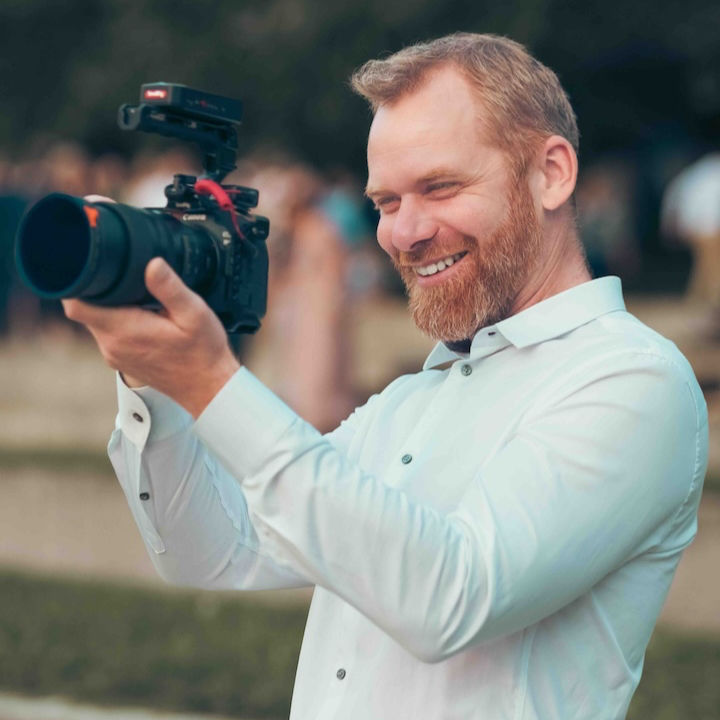
Every film we deliver is either edited by me or cut under my direct supervision, and I wouldn't have it any other way. I was there on the day, so I know which look meant everything, which moment made the room go quiet and why a particular speech has to stay in. Years in television production taught me that the edit is where a story is really made, and I’ve never wanted to fully hand that over.
It also keeps things honest. The style stays consistent, every cut gets my sign-off, and if something isn't right, the buck stops with me.
If you'd like your wedding film shaped by the person who filmed it, get in touch and let's chat! Your day deserves a film shaped by someone who actually laughed at the best man's jokes. :)
FAQ
How long does wedding videography editing take?
Our standard timeline is within 8 to 10 weeks, depending on the package, though timelines vary across the industry.
What are the main steps in wedding videography editing?
Organising footage, selecting the best moments, building the story, colour work, audio and music, subtle transitions, and a final review before export and delivery.
How much does professional wedding video editing cost?
Editing is built into our wedding film packages, which start from NZ$2,600. Standalone editing prices vary widely between editors.
Can I hire a professional editor to edit my wedding footage?
Yes, freelance editors exist, but results depend heavily on the footage you give them. Editing works best when the person who filmed the day either edits the film or closely supervises the edit.
Loved this article? Bookmark it so you can easily find it later!
And if you're ready to talk wedding films, get in touch here, we'd love to hear from you!
 | I'm George, the filmmaker and creative partner behind Red Guy Films. I create cinematic wedding films full of emotion and meaning. I began my career in television and advertising back in 2005, and I've been telling real stories ever since. |


Comments